
Summer Thunderstorm Debris Cleanup in Deltona
Central Florida's daily summer thunderstorm pattern generates real cleanup work outside of named-storm hurricane season — here is how to plan for it.
ReadStorm Debris guide
How to plan container rental around Atlantic hurricane season — when to book, what actually fills a storm-debris load, and what to leave to the professionals.

Living in Central Florida means planning around Atlantic hurricane season every year, not just reacting to it. Deltona and the rest of Volusia County are inland enough to avoid the worst storm surge that coastal Daytona-area communities face, but wind damage, downed trees and heavy rain still generate real cleanup work most seasons. Here is how to think about dumpster rental around it.
Atlantic hurricane season runs June 1 through November 30, with the statistical peak from mid-August through October. That is a long window — planning for it means more than watching a single forecast a few days out.
The single biggest thing you can do is call before a storm arrives, not after. Demand for containers spikes hard region-wide in the days immediately following a named storm, and availability tightens fast. If a storm is forecast to affect Central Florida and you already suspect you will need cleanup afterward, calling ahead of landfall puts you meaningfully earlier in line than waiting until the skies clear.
A single significant storm can generate enough debris on one property to fill more than one container, particularly on larger, well-treed lots.
Standing floodwater, active water extraction, and downed power lines are not something a roll-off container addresses — those need a mitigation contractor or the utility company first. Once the immediate hazard is handled and the debris itself needs hauling, that is where we come in.
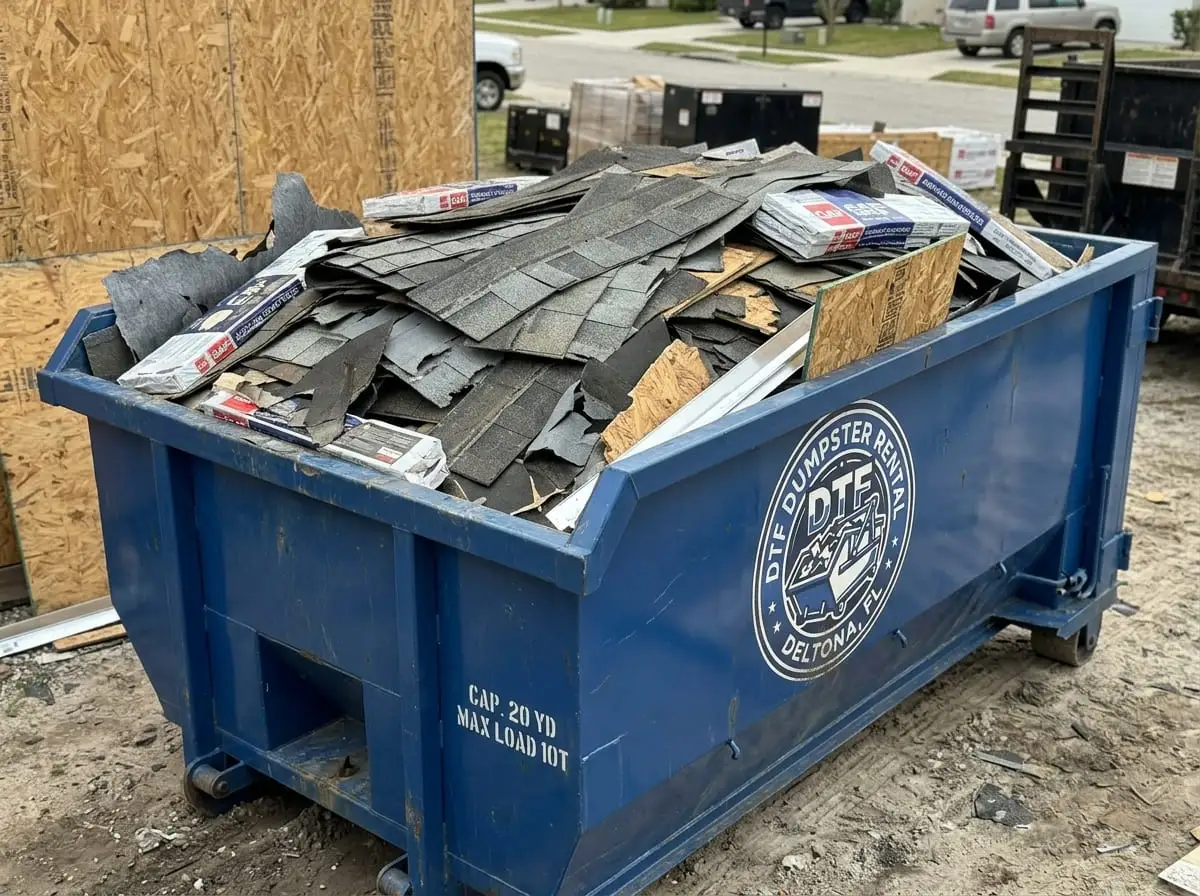
Downed limbs and branches are bulky and light — a volume problem, usually well handled by a 15 or 20 yard for a typical single property. Roofing tear-off debris is heavier per square foot, especially with tile roofing common on many Deltona-area homes, and may push toward a 30 yard depending on the roof's size. Describe what came down and we will size it rather than guess.
Our flat-rate pricing model does not change during storm season. What can change is how quickly we can get a container to you, purely because of regional demand in the days right after a storm — never the pricing structure itself. We would rather tell you honestly that the timeline is a day longer than usual than promise something we cannot deliver.
Once cleanup debris is cleared, it is worth a look at whether the same storm did roofing damage that needs a proper tear-off and replacement — see our roof replacement checklist for what that process looks like separately from the initial debris cleanup.
Talk to a real person
Call (386) 204-0684 and describe the job. Flat price, stated tonnage allowance, and a delivery window on the same call.
Mon–Sat 7:00am – 7:00pm
From this guide
Atlantic hurricane season officially runs June 1 through November 30, with the statistical peak in August and September.
Before, if you know one is forecast to affect Central Florida. Demand spikes hard in the days immediately after a named storm, and calling ahead puts you earlier in the queue.
Yes, most storm-cleanup loads are exactly that mix. Just flag anything unusually heavy, like waterlogged material, so we can size correctly.
Keep reading
Central Florida's daily summer thunderstorm pattern generates real cleanup work outside of named-storm hurricane season — here is how to plan for it.
ReadA practical, room-by-room spring cleanout plan for Deltona homeowners, timed to get ahead of hurricane season before it starts.
ReadWhat to plan before, during and after a roof replacement in Deltona — including dumpster sizing for shingle versus tile debris.
Read