

Dumpster Rental Cost in Deltona, FL | 2026 Prices
Real price ranges by size, what actually moves the number, and how to avoid a surprise overage charge on the final invoice.
ReadConstruction guide
How to plan container service across a new-home build in Deltona — sizing by phase, scheduling swaps, and what to keep separate.
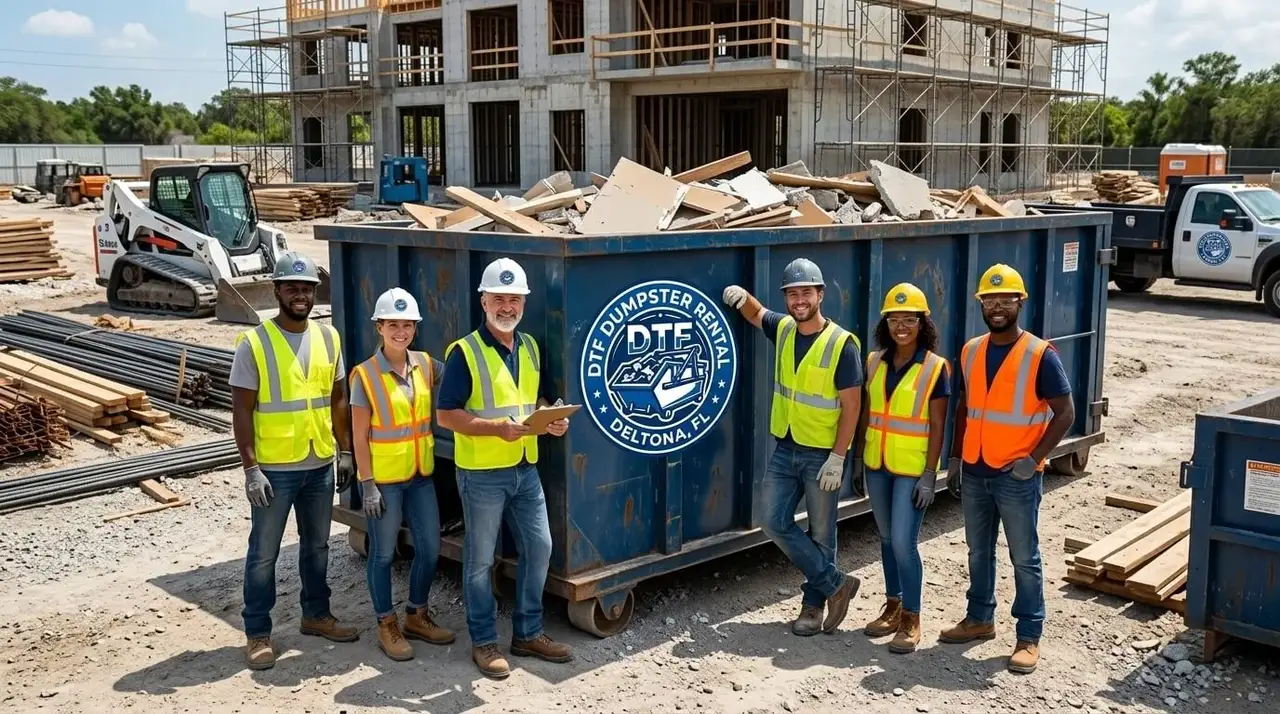
Deltona is still building out platted lots more than sixty years after the Mackle Brothers first laid out the community, and new-home construction remains a steady share of our container business. A new build generates a different debris profile at each phase, and planning container service around that phase-by-phase reality beats treating the whole job as one static rental.
Early-stage debris is often lighter on volume — packaging from initial deliveries, some site-clearing debris — but if a slab pour generates cutoff concrete or excess material, that is worth its own dedicated container rather than mixing it into general job-site debris.
This is typically where debris volume picks up fastest — lumber offcuts, packaging from framing material deliveries, and general job-site waste. A 30 or 40 yard container is the common choice here, since framing debris is bulky and light rather than dense.
Electrical, plumbing and HVAC rough-in generates moderate packaging waste; drywall installation adds its own volume of scrap and packaging. Many builds swap to a fresh container at this phase rather than continuing to fill the framing-phase box.
Flooring, cabinetry, trim and fixture installation generates a mix of packaging and offcut debris, generally at a lower volume than framing. A 20 yard is often sufficient for this stage on a typical single-family build.
Rather than one container sitting for the entire build, most active job sites do better with scheduled swaps timed to when a container is actually full — not a fixed calendar day that may not match real progress. Talk through your build schedule with us before the first delivery so we can plan swap frequency around it.
Larger builds, or builds running multiple trades simultaneously, sometimes run two or three containers at once — one for general debris, one for packaging, and occasionally a dedicated one for concrete or masonry waste. Tell us what trades are active and we will plan the count.
New-construction lots on the edges of Deltona's still-developing subdivisions sometimes have unpaved or sandy approach roads. Tell us about site access when you book so we can confirm the delivery truck can get in and out without issue.
If you are running multiple addresses at once, a standing account with us simplifies scheduling across sites — call the yard to set one up rather than booking each delivery as a one-off.
Talk to a real person
Call (386) 204-0684 and describe the job. Flat price, stated tonnage allowance, and a delivery window on the same call.
Mon–Sat 7:00am – 7:00pm
From this guide
Often, yes, especially across a longer build. Framing debris, packaging waste and finish-stage debris are different enough in volume that spacing out swaps usually works better than one static container for the whole project.
A 30 or 40 yard for the framing and rough-build phase, often stepping down to a 20 yard for finish-stage debris.
Keep it separate if possible — concrete's weight will hit a container's tonnage allowance far faster than framing debris, and a dedicated container for it is usually cheaper overall.
Keep reading
Real price ranges by size, what actually moves the number, and how to avoid a surprise overage charge on the final invoice.
ReadThe full list of what is and is not allowed in a roll-off container, and where the restricted items actually need to go instead.
ReadWhen you need a permit for a roll-off container in the Deltona area, when you don't, and who to actually call.
Read